


Populating Attributes and Relationships
On this page
In this lesson, you will learn:
- How variables fill CI attributes
- How to create a Runs on relationship
- What to check
🔁 Quick look back: Last time: Collecting and Parsing Data. You learned how the pattern reads archiver.conf and extracts values.
1 The Problem: Collected Values Don’t Save Themselves
The pattern now holds version, port and archive path in variables. But:
- Nothing is on the CI yet.
- The archiver isn’t linked to snwr-mail-02.
👉 The fix: Map variables to CI attributes, and create the Runs on relationship.
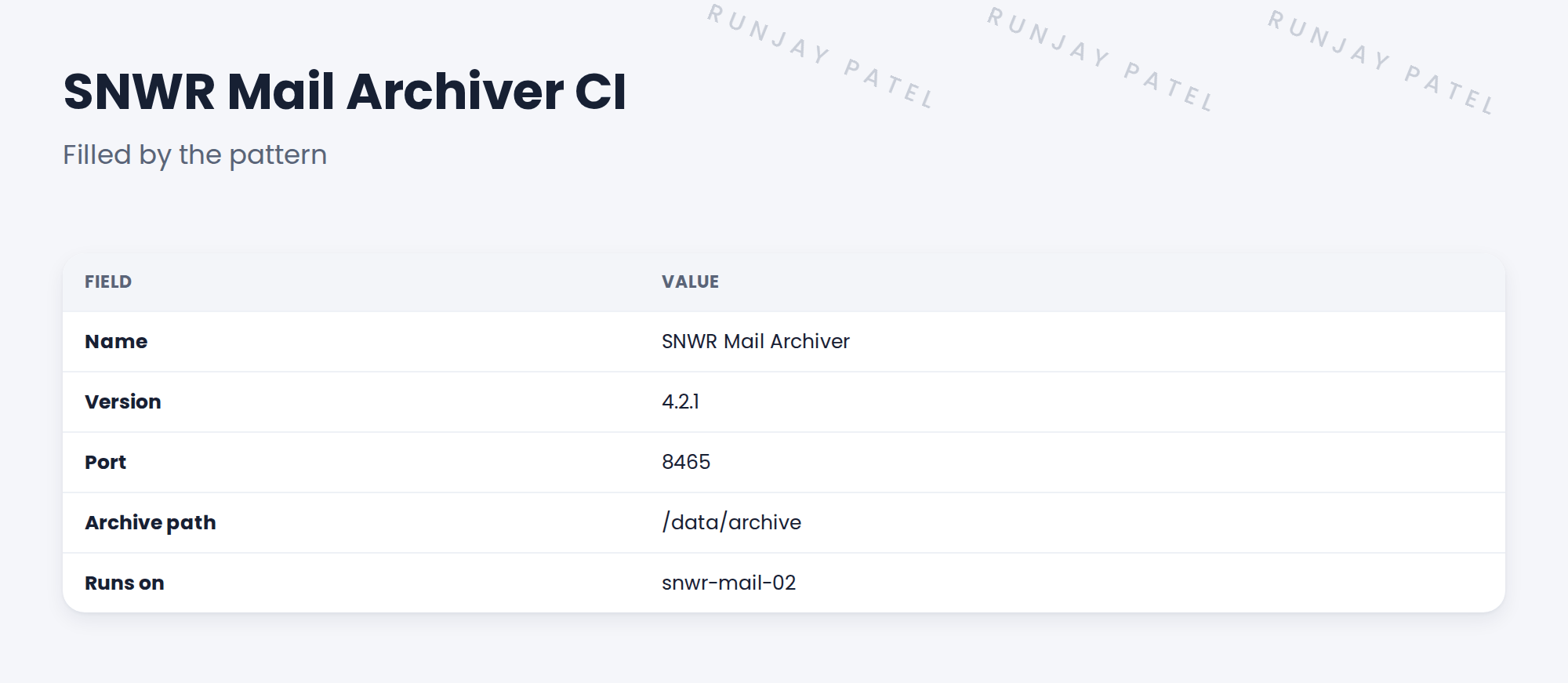
2 Filling attributes
Each variable is mapped to a field on the SNWR Mail Archiver class. The pattern’s CI type decides which class is filled.
3 The relationship
Key term: Runs on
A relationship that says software runs on a server.
Application patterns link the app to the server they ran on. Check the link appears after a test.
4 Project Clear View: How We Implemented It
📍 Situation: Variables were ready but the CI was empty.
🧭 Decision: Map the variables and check the Runs on link.
🛠️ Steps we took:
- Set the pattern’s CI type to SNWR Mail Archiver.
- Mapped version, port and archive path to fields.
- Ran Debug on the lab copy and saved the result.
- Checked the Runs on link to its server.
✅ What we verified:
- The CI shows all three values.
- Runs on links to the right server.
📁 Evidence: Attribute mappings, part of the archiver pattern.
5 Quick recap
- Map each variable to a CI field.
- The CI type decides which class is filled.
- Application patterns create a Runs on link.
- Check the CI after each test.
6 Check yourself
Think of your answer first. Then tap to check.
1 Which relationship links the archiver to snwr-mail-02? Show answer
Runs on.
2 What decides which class the pattern fills? Show answer
The pattern’s CI type.
3 What version did the archiver report? Show answer
4.2.1.
Nice work! The archiver CI is filled and linked. 🎉
Next up: Adding Connection Logic Where Required
Was this lesson helpful?
Please log in to share lesson feedback.
Have a question or doubt?
Ask here and get help from instructors and fellow learners.
Only logged-in learners can post.





